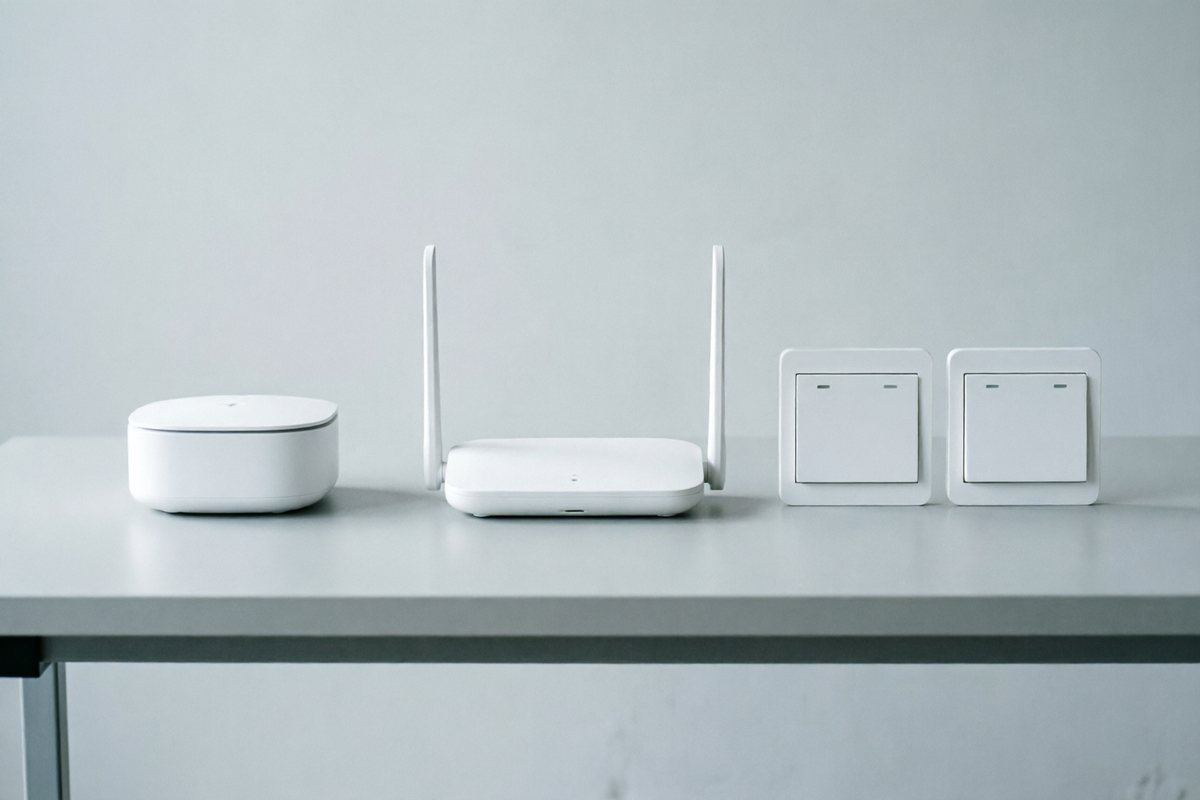
Both Wi‑Fi and Zigbee can drive a glass touch switch. The wrong choice shows up as support tickets: devices offline on congested 2.4 GHz, or a hotel floor with no hub plan. This comparison is for B2B buyers writing RFQs, not for DIY blogs.
Wi‑Fi — hub-free, cloud-first
- Pros: No gateway SKU; simple for small residential packs; easy Alexa/Google path via Tuya-class stacks.
- Cons: Depends on 2.4 GHz coverage at each box; more cloud dependency; dense buildings can saturate SSIDs.
- Sample SKU: PL-SW-T3-WIFI-86
Zigbee — mesh, needs a gateway
- Pros: Better multi-device rooms; lower per-device radio load on the home router; common in sensor-heavy packs.
- Cons: Must quote gateway (e.g. sample PL-GW-ZB-MTR); pairing discipline for installers; ecosystem lock-in risk.
Quick decision table
| Scenario | Lean Wi‑Fi | Lean Zigbee |
|---|---|---|
| Apartment resale packs, few devices | Yes | Optional |
| Hotel / multi-sensor room | Only if proven Wi‑Fi design | Often better |
| Buyer refuses hubs | Default | Hard sell |
| Future Matter roadmap | Confirm module revision | Confirm bridge/endpoint path |
What to write in the RFQ
Protocol · whether gateway is in scope · app brand · density (devices per room / floor) · Wi‑Fi survey available or not. See also Protocols page.
Need both lines in one shipment?
Trading desks can mix Wi‑Fi switches and Zigbee sensors if the BOM and packing lists stay clear — state both in one RFQ.
Start RFQ